

PERC-Supported Grant Enables NYCAMH to Advance Respirator Use to Help Reduce Pesticide Exposure in Spanish-speaking Farmworkers
May 26, 2026 (FLY CREEK, NY) – The New York Center for Agricultural Medicine and Health (NYCAMH) announced the completion of a project supported by a grant from the Pesticide Educational Resources Collaborative (PERC) through its Agricultural Community-Based Projects (AgCBP) program.
The project focused on improving how agricultural workers, particularly Spanish-speaking farmworkers, understand and use respirators as a critical safeguard against pesticide exposure.
Proper respirator use is one of the most important protections available to reduce pesticide exposure in agricultural work. However, respirator fit testing is often treated as a compliance requirement rather than an opportunity for meaningful education.
NYCAMH addressed this gap by working directly with Spanish-speaking farmworkers and their employers to develop practical, culturally relevant, and bilingual tools and training designed for real-world use.
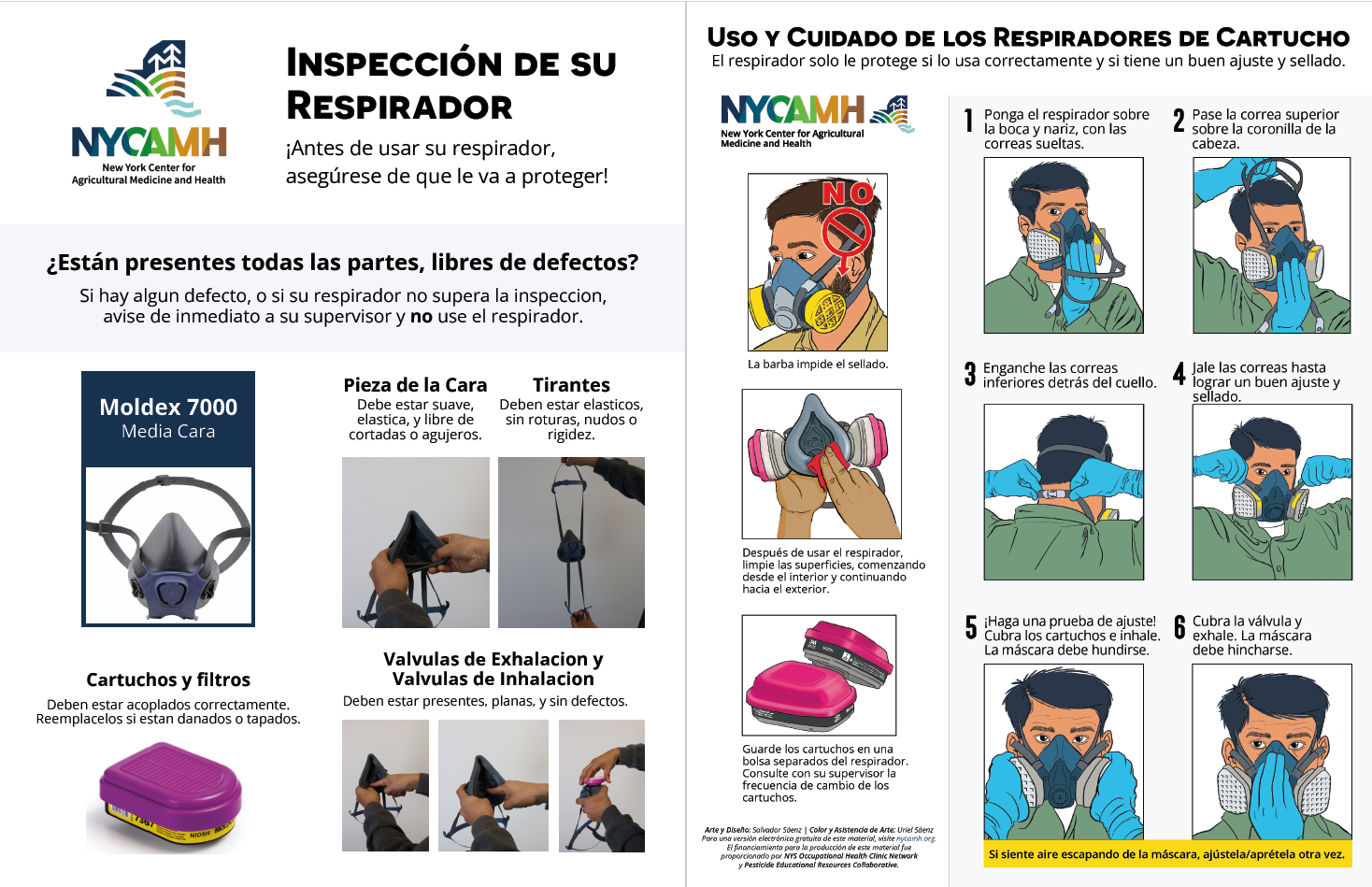
Key outcomes include:
- Engaged 11 Spanish-speaking farmworkers and 4 agricultural employers
- Conducted two rounds of interviews to identify knowledge gaps and barriers
- Distributed materials across 5 fit test clinics and 6 agricultural events
- Developed and implemented enhanced training protocols to improve understanding and knowledge retention
- Delivered bilingual (Spanish/English) materials and training tailored to farmworker needs
“By working directly with agricultural workers and recognizing their experience, we developed tools and training that help workers understand how proper respirator use protects them from pesticide exposure in their daily work,” says NYCAMH Center Manager Liane Hirabayashi.
The project introduced hands-on learning, peer demonstration, and materials designed for immediate use, ensuring that workers not only receive information, but apply it in practice.
This work demonstrates how community-centered, bilingual training can improve both understanding and real-world application of respirator use, ultimately helping reduce pesticide exposure across agricultural communities.